Art of Ukiyoe
Fine Japanese Prints
Masterpieces and rarities, from early Ukiyo-e to Shin Hanga, all guaranteed original.
Our Newest
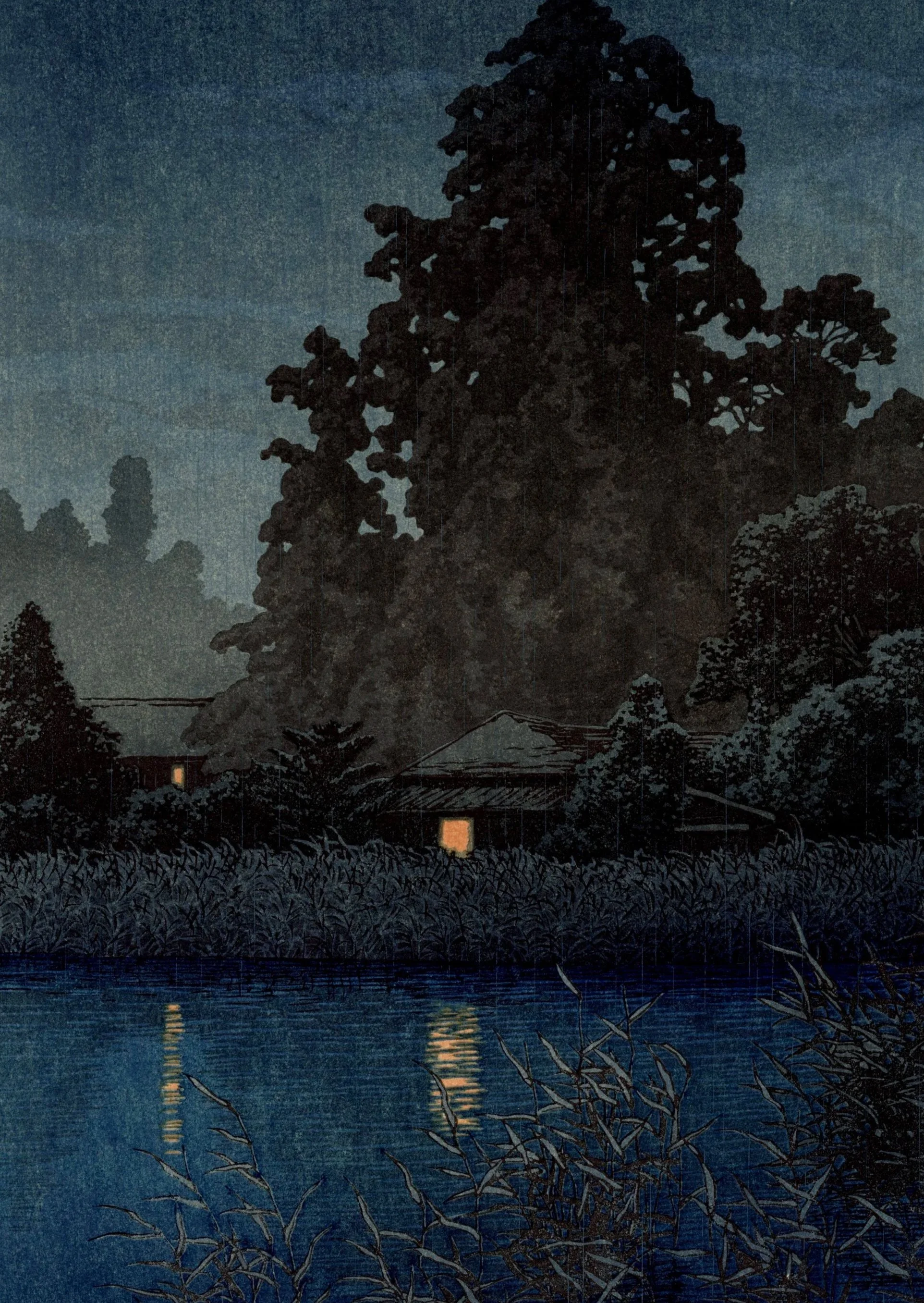
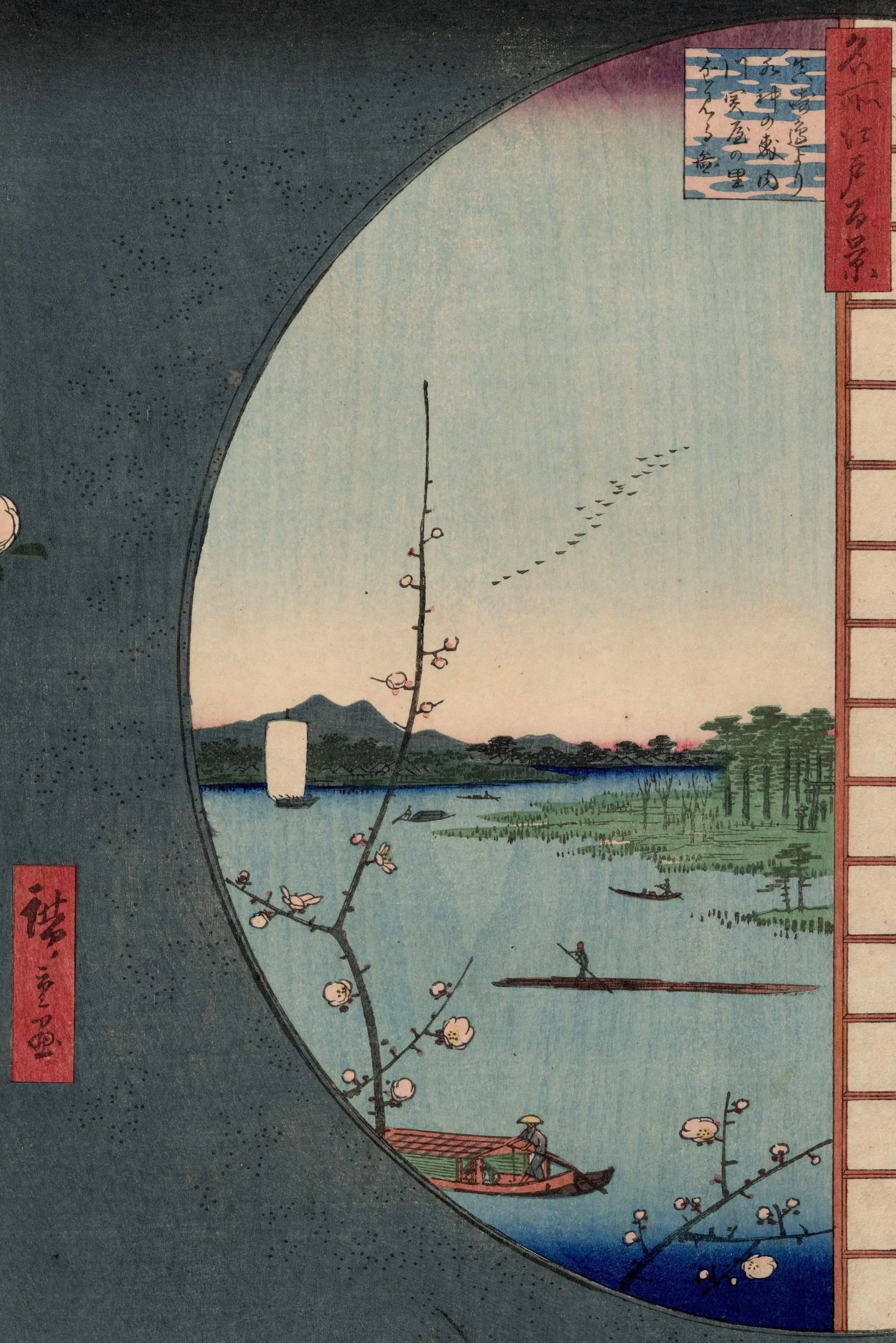
Utagawa Hiroshige
View from Massaki of Suijin Shrine, Uchigawa Inlet, and Sekiya, from the series of 100 Famous Views of Edo(1857)
歌川広重
名所江戸百景 真崎远望水神之森与关屋之里(1857年)
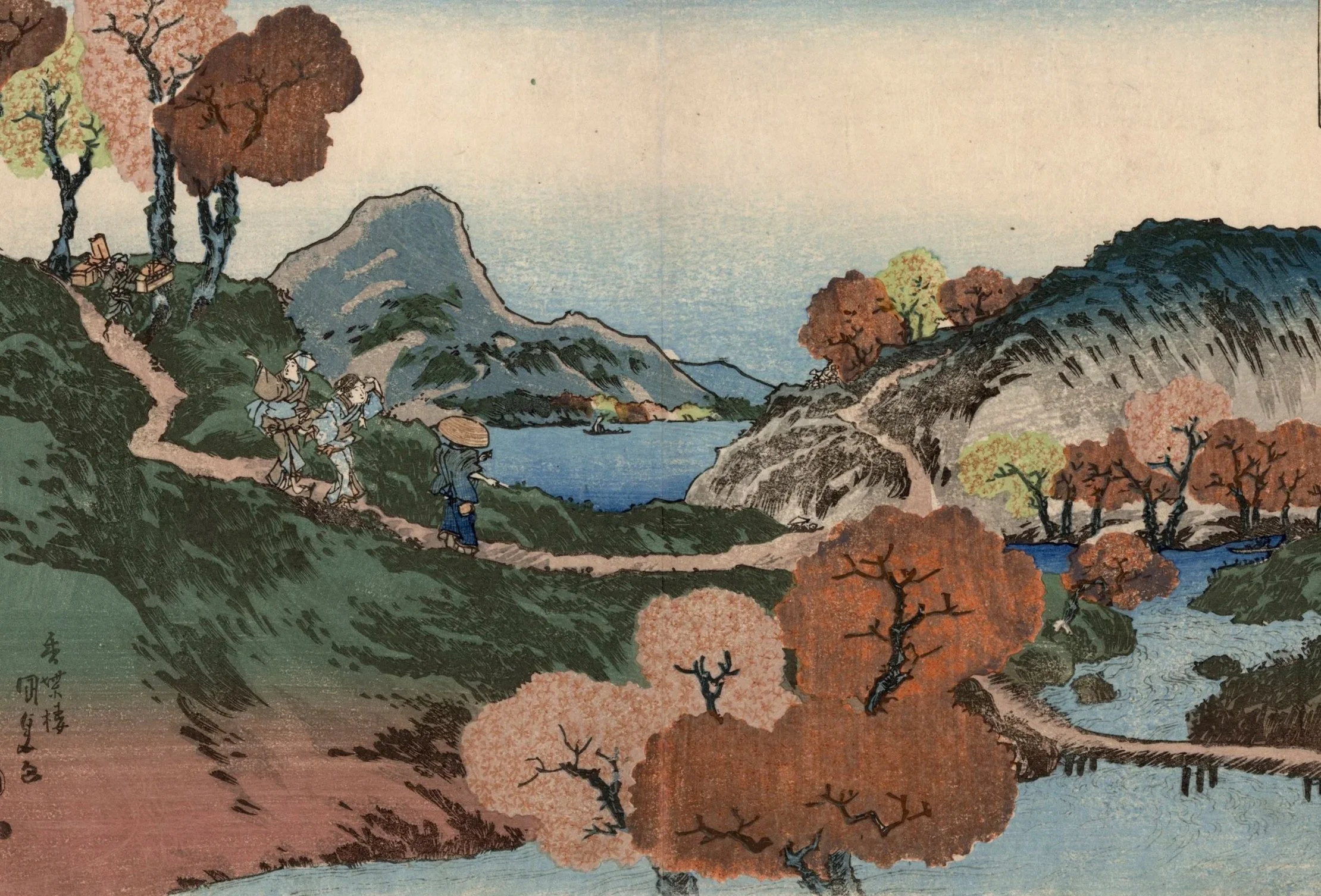
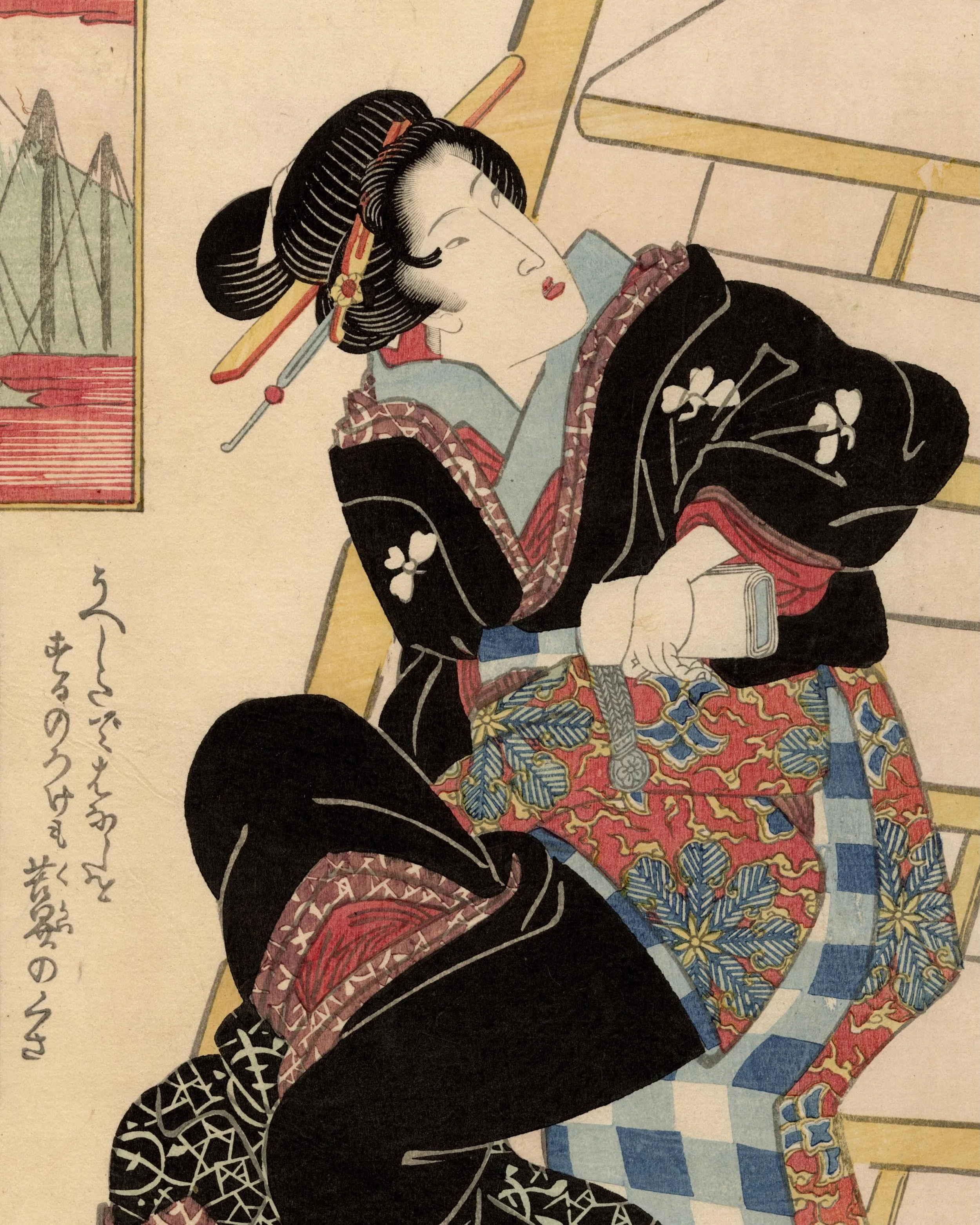
Utagawa Kunisada
Maple-leaf Viewing, from an untitled series of landscapes (1832)
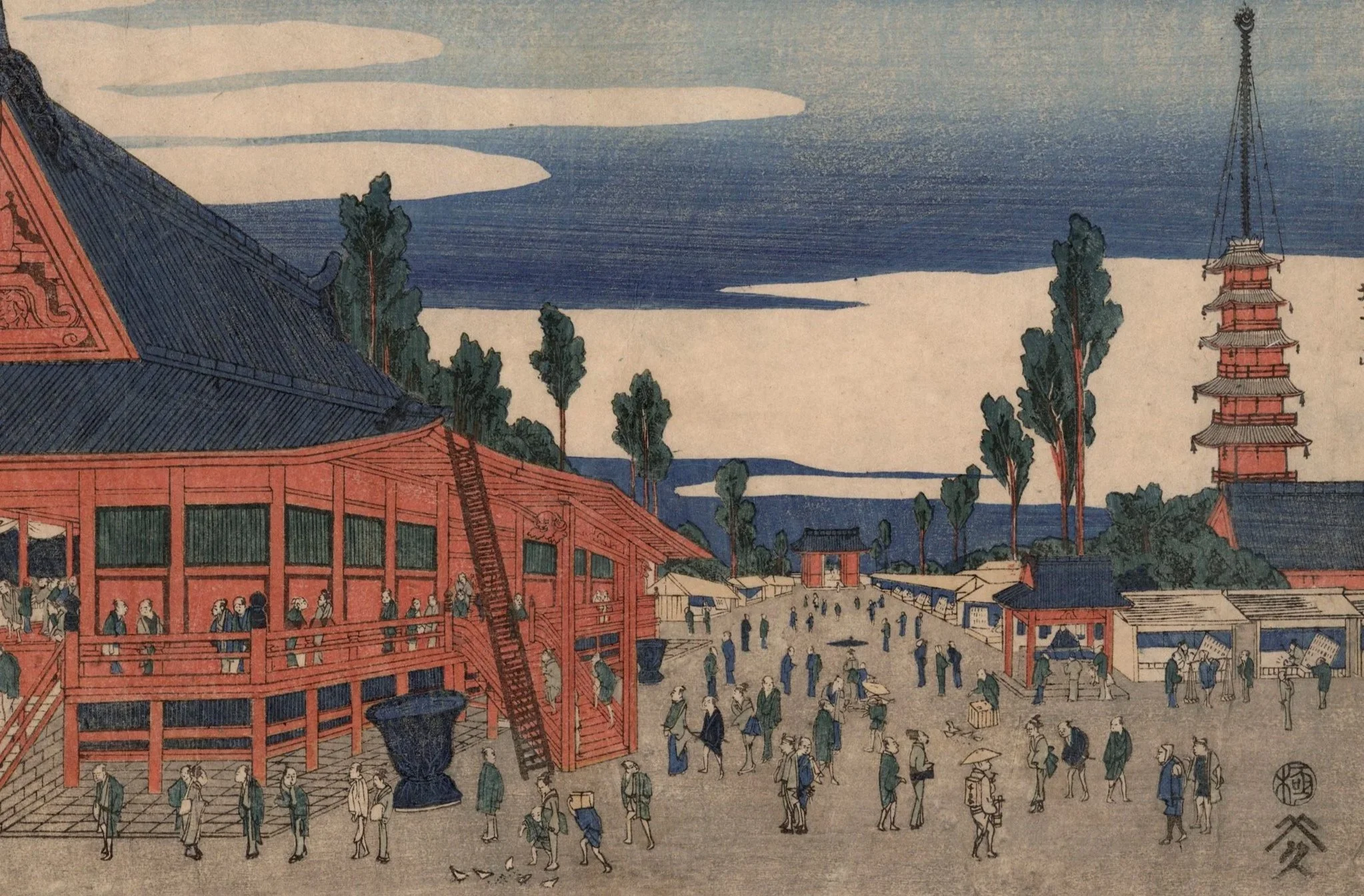
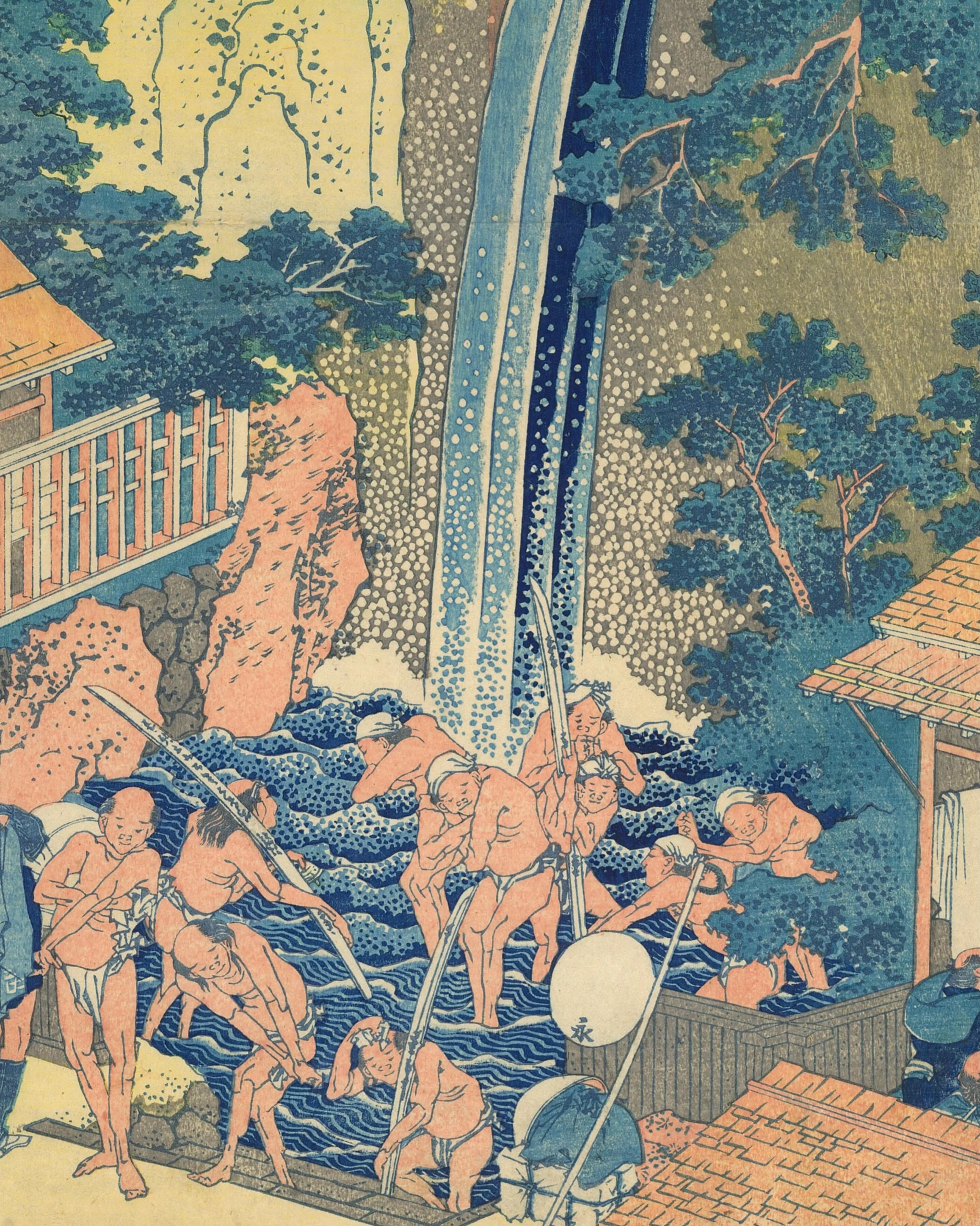
Shotei Hokuju
Senso-ji Temple at Kinryuzan, from the series of The Eastern Capital (1818-30)
昇亭北壽
东都金龙山浅草寺之图 (1818-30年)
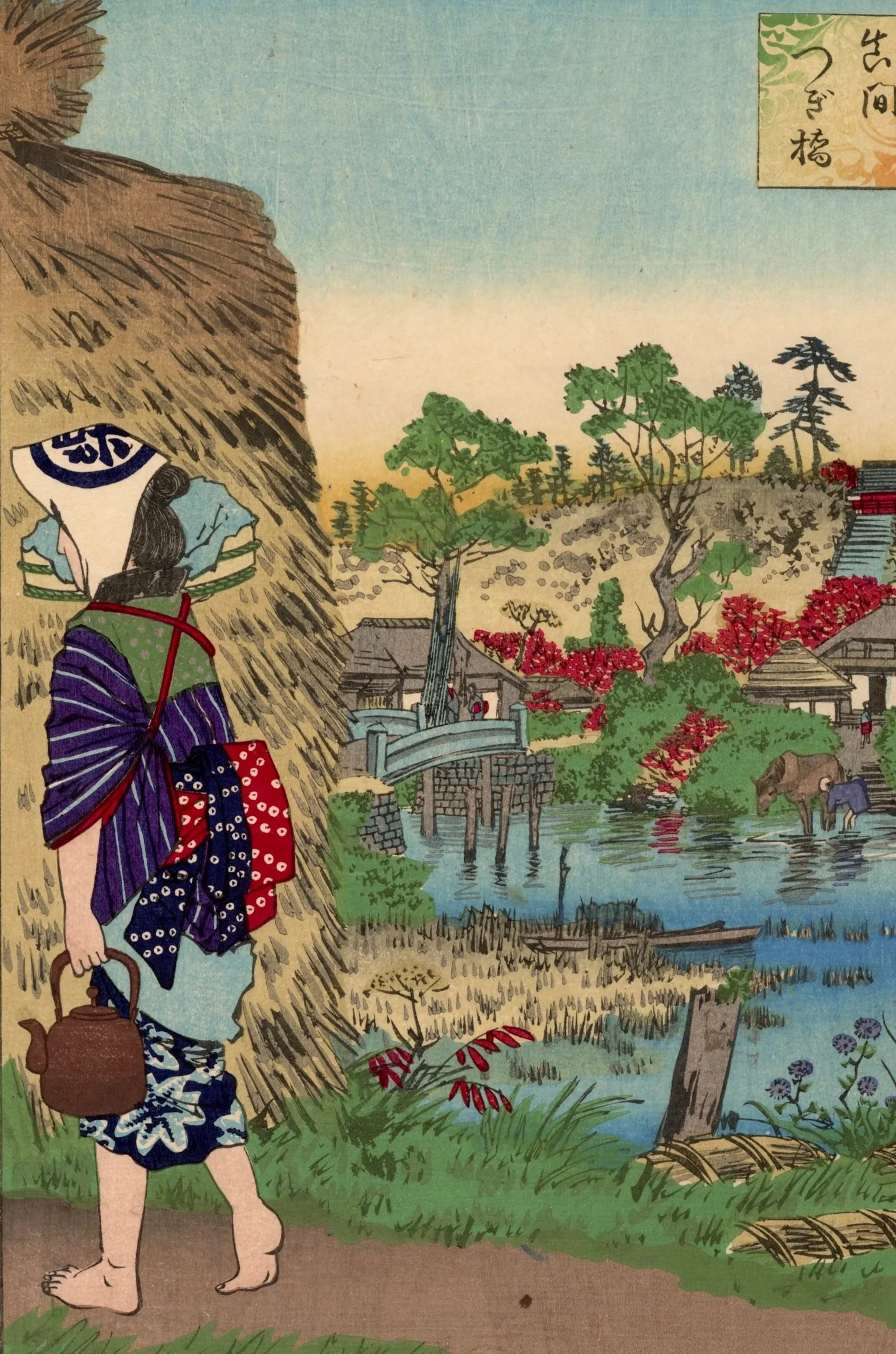
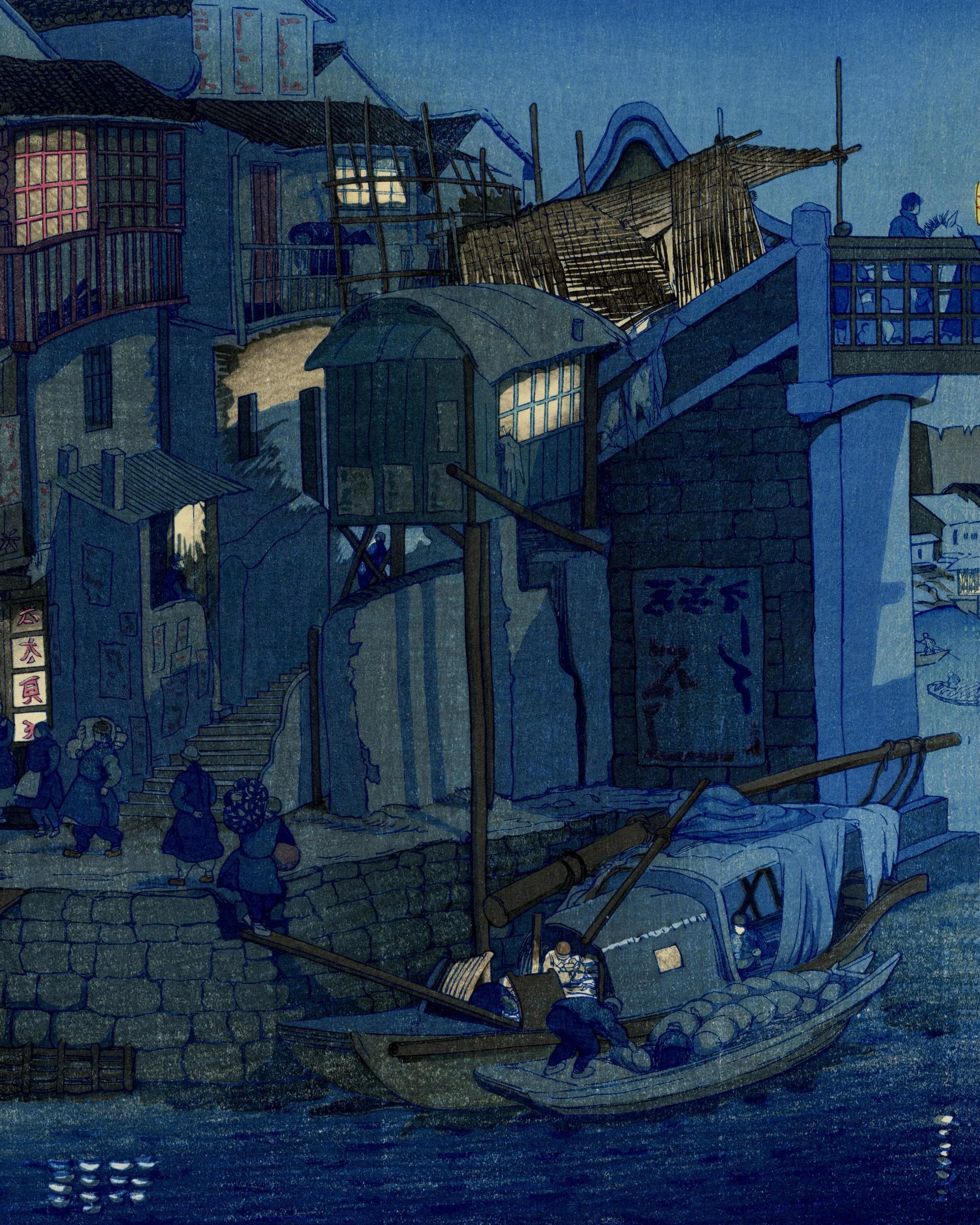
Kobayashi Kiyochika
A bridge in Shimofusa, from the series of One Hundred Views of Musashi (1884)
小林清亲
武蔵百景之内 下総真間つぎ橋 (1884年)
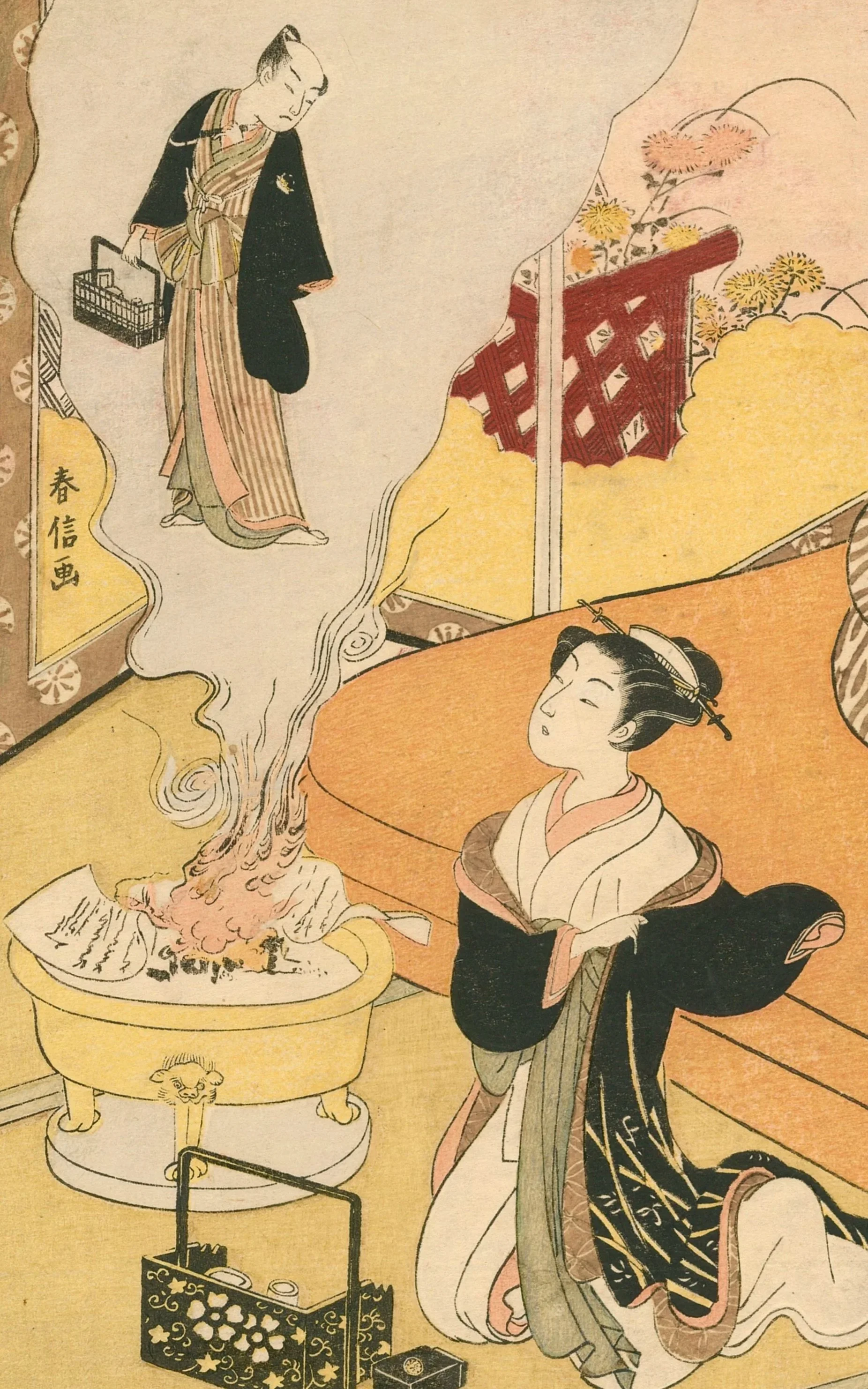
Suzuki Harunobu (1724–1770) Courtesan Burning a Love Letter
Featured Print:
Autumn Smoke
Autumn brings sadness. The days fade away, the air chills, the darkness of winter looms with every sunset. Yet there is beauty – bright blue skies, clouds limned with gold, maple leaves turning flame-red before floating to the ground.
It's been a hot summer in Tokyo, but we are feeling the first hints of the crisp new season. In New York City, my friends tell me, the trees in Central Park have started to turn. And my hometown of Guangzhou? Not so much – it's always hot there.
To mark fall's arrival, I've chosen a personal favorite from Art of Ukiyoe's inventory for my new featured print: Suzuki Harunobu's autumnal and deeply melancholy Courtesan Burning a Love Letter from the 1760s. A subtle palette of oranges and gentle yellows, and a folding screen depicting fall flowers such as Chrysanthemum and Japanese silver grass (susuki), are two hints of the time of year.
But really, it's the mood that creates the feeling.
The young courtesan, her heart broken, burns her lover's letters in a flaming brazier. And then, in the smoke – his image appears, evoking all the deep emotions of love and affection she'd sought to destroy. She is a classic Harunobu beauty – delicate, ethereal, dreamlike, neither of this world nor out of it. And isn't the end of summer like the end of a beautiful romance?
It's a somber, magical image. We see the disheveled futon waiting to keep our beauty warm against the cooling night. Or perhaps she's just thrown it off when, unable to sleep, she decided to set the letters on fire. Her pipe lies on the ground, as does a packet of tissues surely used to dry her tears.
Harunobu is considered by some to be the father of color Japanese woodblock prints. While the printing technique had been invented in ancient China by Harunobu's time, the technology had advanced very little over the centuries. He devised methods to use more color blocks, and to keep them properly registered. Thus, his were the first designs reproduced in full color as Nishiki-e, or “brocade pictures.” Untold thousands would follow in the ensuing centuries.
-
But while the design is creative to the point of being modernly surreal, its origins like the technology also go back to ancient China, making this a perfect print for Art of Ukiyoe's Chinese-Japanese-Western audience.
The idea of incense smoke conjuring humans was first seen in "Records of the Ten Continents in the Sea" written by Dongfang Shuo. It is said that Emperor Wu of the Han Dynasty also used it to summon Madam Li, of whom he dreamt day and night. Harunobu uses the beauty to represent Emperor Wu of Han and replaces Lady Li with a young man. It’s a clever switch, and it gives this marvelous design an entirely new power.
Sharon
Please mail, phone, Wechat or WhatsApp me. I'm happy to answer any questions. I’m also happy to send additional photographs.
This is only a limited selection of our prints.
To see more, please contact me.
如果您有兴趣购买版画,请通过邮件、电话、微信或WhatsApp与我联系,我将非常乐意回答任何相关品相问题。
本网站仅展示我部分藏品,如想欣赏更多画作,请与我联系。
How to Purchase
Learn more about payment and shipping, please click Here
Follow Us